Wednesday, April 6, 2016

"The Vacationers": A Book to Take On Vacation


I just returned from a fabulous vacation in Playa Del Carmen, Mexico.  Living in Chicagoland means that weather through April is iffy at best.  One sunny day of 65 degrees can easily transgress into a snowy day of 39 degrees.  On Saturday (the day we returned from Mexico where the weather was 85 degrees and sunny every day), Mother Nature melted down with one huge 24 hour tantrum.  It rained, it snowed, the sun came out, and then we even had thundersnow before the winds started punishing us for being human.

Because I was lucky enough to rejuvenate in Mexico, the tantrum didn't bother me.  I stayed inside and snuggled up next to the fire with a big cup of coffee and finished the second book that I took with me to Mexico - Emma Straub's novel "The Vacationers."

I admit that I purchased the book because of the pretty cover with the people floating in a pool of aqua blue (my favorite color).  It's a shallow reason for purchasing a book, but it called to me on the table of recommended reading at Barnes and Noble.  I'm so glad it did, because from the first chapter I was addicted to the story of the Post family's two week vacation to Mallorca, Spain.

The Posts are a family in crisis.  Jim, the 60 year old Post patriarch, recently retired from his job as Editor at the magazine Gallant, and spends his days moping around the house.  His early and abrupt retirement stemmed from his affair with a 20 something intern named Madison.  She tempted him and he gave in to her youthful seduction and was "let go" by the board.  His wife, Franny who is a food journalist and loves to cook, vows to never forgive him his transgression.  Their daughter, Sylvia, a petulant college bound slacker is saddened by her parents, but even more disgusted by her gym rat brother, Bobby, who has become a Miami stereotype - a muscle clad, club hopper who hates his real estate job and is indifferent to his cougar girlfriend, Carmen.  No one in the family enjoys Carmen's company because her thoughts veer to physical fitness all the time and she shares no common interests with the cultured Posts.

Along with the four Posts and Carmen, a gay couple, Charles and Lawrence join the family for this two week getaway.  Charles is Franny's oldest friend and confident and his decade younger husband, Lawrence is set on adopting a baby.

Once they arrive in Mallorca, the tensions and truths start to come out.  All of the Posts and even Charles and Lawrence must deal with infidelity in some way throughout the 14 day stay (the book's chapters are divided by the days - 14 chapters for the 14 day vacation).  Sylvia is still reeling from her kinda sorta boyfriend's betrayal with her best friend, and Bobby gets into predicaments because he doesn't want a long term commitment to Carmen.  Even Charles and Lawrence must deal with infidelity.

The men in the book are a bit drab with the exception of Sylvia's Spanish Calvin Klein model tutor, Joan (pronounced Jo-ahhhn).  Jim's sullen sulkiness becomes redundant, and Bobby's adolescent behavior is boorish.  Charles and Lawrence are almost indistinguishable.  Sylvia, Franny and Carmen add some spice to the book, but oddly the ones that are supposedly unlikable become likable.  Franny bugged me more than Jim.  Sylvia was more annoying that Bobby in parts.  And Carmen, the one the family liked the least, was at times the most genuine and likable character in the book even if her whole life revolved around the next workout and protein shake.

Nonetheless, the setting in the mountains of Mallorca along with the conversations and thoughts of the characters and their dinners together (tense and delicious), were enough to sustain a great narrative revolving around growth.

How do you move on after failure and heartbreak? How do you start the next phase of your life? How do you know for certain when it's time to move on in a different direction? All of these questions are central to this story and Straub is able to equally capture the tension and the wit in delicate family situations.

Even with the too quick wrap up at the end of the novel which seemed less than real, the rest of the story pulses with the times in life where we are conflicted with who we are and what decisions we need to make to move forward.  And who doesn't love a vacation story that ends well (especially when reading a book about a vacation on a vacation)?


Wednesday, March 16, 2016

"Bone Gap:" Original and Fresh YA Magical Realism


Before I get too far into this, I must admit that "Bone Gap" by Laura Ruby was VERY hard for me to get through.

It's not because this book isn't a book one it's more that I am not a fan of magical realism.  I prefer my reality to stay reality and my fantasy to stay fantasy.  When everything gets twisted together I get somewhat agitated.

But here's the deal -
Ruby's book is original.  It's fresh.  It's lyrical and it has stayed with me.  It was a National Book Award Finalist as well as a Printz Honor Winner and those awards and numerous accolades make sense.

At the center of the story are two brothers - Sean and Finn O'Sullivan who live on their own after a tragic accident that took the life of their father and then the subsequent departure of their bereft mother.  Sean vows to take care of his younger brother, Finn, who is odd even for a small town full of a menagerie of trippy characters.  Finn is often beat up by the Rude brothers and called "Moonface" or "Sidetrack" because of his spaced out demeanor.  His saving grace seems to be that he's beautiful just like his mom.

When a gorgeous Polish woman named Roza suddenly turns up in their barn with injuries and no story, the brothers quickly fall in love with her - one in a romantic way and the other in more of a brotherly sort of way.  When Roza suddenly disappears one year later, no one wants to believe Finn's story that she has been taken by a man whose face he can't describe.  Sean believes that everyone wants to leave them, but Finn knows that they need to find her and save her.

Based on the tale of Persephone who gets taken by Hades into the underworld, the realism of small town life gets tangled with black mares, pomegranate cookies, barren gardens, talking corn fields, and prosopagnosia.  Ruby's own poetic style interspersed with a honey laden, young love story make the novel even more dream like.

I appreciate the craftsmanship of the complexities and layers of this tale.  At it's heart is love and how we view the people that we fall in love with and who love us back, and how that changes the way we view ourselves.  It's also about the interconnectedness of small town life full of gossip and secrets - the gaps we fill with stories and those that we leave open for others to discover, as well as the gaps that sometimes swallow us whole. When Charlie Valentine tries to explain the mysteries of Bone Gap to Finn he tells him, "Because we don't have your typical gaps around here.  Not gaps made of rocks or mountains. We have gaps in the world. In the space of things. So many places to lose yourself, if you believe that they're there.  You can slip into the gap and never find your way out.  Or maybe you don't want to find your way out."

It's quite beautiful when I think about it, but I slogged through the reading of this novel vs. enjoying the tale unfold. At times I thought I should abandon it in favor of the other books in my towering bedside stack.  But I stuck with it, and I'm glad that I did because I keep thinking about the story and the characters, and I want to read more about Persephone.

If you want something that isn't ordinary or expected, with a mystery, a love story, and a modern twist on a mythological tale, "Bone Gap" is going to be your new favorite book.

Tuesday, March 8, 2016

"Fever 1793": An education about yellow fever

Sometimes I am astounded about my lack of historical knowledge.

I consider myself a rather intelligent person who has an advanced degree plus years of extra schooling and workshops, and 15 years of classroom experience.  Unfortunately, I had the worst ever high school history teacher three years in a row.  His idea of teaching was sitting at his desk and going on tangents of his choosing with his hands behind the back of his head and his feet propped up on his desk.  Occasionally, he'd break out an ancient slide show while many students slept through it. I always volunteered to read the slides aloud for no other reason than to keep myself awake.

I've learned all of my history through self study and through reading historical fiction.  When I read a great one, I do more research to find out even more about a specific period of time.  During the time I taught, I did the same thing; I immersed myself in the history of whatever novel we read.  For "The Great Gatsby," I had the students study famous people of the time and then come to a "Shindig for Smarties" dressed as those people and interacting as them during Charleston contests and mingling.

Recently, my daughter Raina came home and told me about Laurie Halse Anderson's book, "Fever 1793." She said, "You've got to read this book, Mommy.  It's totally gross and totally amazing."  How could I pass up that perfect book review?

I happened to own a copy (leftover from my days in the classroom), so I cracked it open at lunch and didn't stop reading for over an hour.  I finished it that evening before I went to bed.  It's YA (maybe even considered middle reader) so the pace of the storyline is fast and furious.

The story revolves around 14 year old Mattie Cook who is stubborn and lovable.  She lives with her mother and grandfather in the year 1793 in the capital of the new United States, Philadelphia.  Her mother owns and operates the Cook Coffeehouse, and Mattie helps her as much as she can.  News starts to spread about a disease enveloping the city during one of the hottest and buggiest summers ever and people start to panic and flee the city.

The book quickly becomes a survival story when the disease infects Mattie's world and she needs to use all of her courage and instincts just to stay alive.

My daughter was absolutely correct in her review of this book being both totally gross and amazing.  Laurie Halse Anderson knows how to draw her readers into a story.  This is the first historical fiction book of Anderson's that I have read, but I have others on my shelf-  "Chains" (which was a National Book Award finalist in 2008 and won the Scott O'Dell Award for Historical Fiction in 2009) and "Forge".  "Fever 1793" received numerous awards including the ALA Best Books for Young Adults.

It's worth the praise and worth the education.  Anderson thoroughly researched the epidemic and included quotations from actual documents and diaries of the time period at the beginning of each chapter.  My scholastic version of the book even includes more historical information at the very end of the book, so after I read it, I felt like I had received a better education than my high school history lectures.

More than anything, by the end of the book, I was so thankful to be living with modern medical techniques.  We still have epidemics to contend with in our modern era, but hopefully we can learn from the not so pretty outbreaks in our history.

Monday, February 22, 2016

"The Giver": A classic dystopia


My daughter Raina and I started our own two person book club.  On Friday, we had our first meeting at Marzano's, a wood fired pizza place, to discuss our first selection, Lois Lowry's Newbery Medal winner, 'The Giver.'

Raina reads just as much if not more than I do.  Most nights my husband and I need to repeatedly ask her to close her book and get to sleep.  Sometimes after we have gone to bed, she gets back up, and takes her book under her covers to finish it.  When the Book Fairs come to school, she is in heaven; she plans her purchases and after she has reached the limit I set, she dips into her own precious savings and goes on her class "buy day" and purchases every other book she was unable to get.

I knew all this, but I still wasn't prepared for how amazing it was to have a real adult conversation about a complex book with my 11 year old.

She's smart, analytical and quizzical.

Her analysis of the complex topics presented in the book were spot on.

If you are one of the few people who has never heard of "The Giver" or you haven't read it, it follows a boy named Jonas who lives in a utopia.  Everything is fair.  No one feels pain.  No one fights.  No one needs to make any choices because everything is decided for you.  There are special, all inclusive ceremonies for age groups.  All 9 year olds have a bike ceremony, and all 12 year olds have a special ceremony where they are given their assignments (jobs) in the society.  At the assigning ceremony, Jonas is named the new Receiver and needs to attend special top secret meetings with the current Receiver.  It is there, he begins to learn the truth about his world.  And the truth isn't pretty.

Raina and I discussed topics in the book ranging from euthanasia to what it means to be a family.  We talked about euphemisms and why people use them and we discussed the ambiguous ending of the book.  Raina blew me away when we talked about language being controlled and about the nature of love and why a society might want to take away the power to love.

It was an amazing conversation and it made me appreciate my daughter as the unique and intelligent young lady that she is; I am so proud to be her mom.

Choosing 'The Giver' as our first book to discuss was perfect.  At first when Raina started reading it, she told me, "Mommy, this book is a real snoozer." I told her to stick with it because it picks up and gets very interesting at chapter 7. She stuck it out and just as I suspected when she got to chapter 7, she was hooked.  We even talked about how some books that have slow starts can still be awesome to read and the pay off can be even better than books that are quick to get through.

'The Giver' is a classic YA dystopia that even reluctant readers would enjoy (especially after they get through the first 6 chapters), but even more importantly, it presents so many important discussion points about the ways societies are run and individual rights, the importance of memories - good ones and bad ones, and why love can save us.

I highly recommend not only reading 'The Giver' but also reading the books that your kids are reading so you can talk to them on a literary level.  I loved my first book club outing with my daughter.  I can't wait for the next one.


Thursday, February 11, 2016

"Big Magic": A Beautiful Reminder To Create


And while the paths and outcomes of creative living will vary wildly from person to person, I can guarantee you this: A creative life is an amplified life.  It's a bigger life, a happier life, an expanded life, and a hell of a lot more interesting life.  Living in this manner - continually and stubbornly bringing forth the jewels that are hidden within you - is fine art, in and of itself. 

Because creative living is where Big Magic will always abide. - Elizabeth Gilbert


Sometimes so many people recommend a book to me that my only choice is to read it.

Elizabeth Gilbert's "Big Magic: Creative Living Beyond Fear" is one such book.  When I saw that it was featured as a signed book at Barnes and Noble for Christmas, I gently suggested to my husband that it might be a book that I would love to see under the tree on Christmas morning.  He listened and it was mine.

Unlike most books that I get for Christmas, I waited to read this one until I was ready to fully take it in.  I read it with a pencil in my hand to underline important passages and to let Elizabeth Gilbert's message really sink in and resonate with my soul.

My reader relationship with Elizabeth Gilbert is hot and cold.  The book that propelled her to success, "Eat, Pray, Love" was good, but definitely not one of my favorite memoirs.  At times her story of self discovery during her world travels really mattered to me, but at other times I felt completely disconnected to her journey.  I felt the same thing with "The Signature of All Things."  I really, really loved parts of it, but other times I found myself flipping pages to just get it done.

Regardless of this relationship with Elizabeth Gilbert, her Ted Talk titled Your Elusive Creative Genius is one of my favorites of all time.


So I figured that an entire book dealing with the same subject matter would speak to me.  

And it did. 

Gilbert's conversational tone throughout the book drew me in immediately.  It was as if she was talking to me as a friend, a confidant, a fellow creator on this planet who has a voice and a message and doesn't always know how to use it.  She tells stories of her own creative process, her failures and her successes.  

My favorite part of the book was when she explained that ideas are living entities that are waiting to find a medium to bring them into the world.  "Remember: All it [an idea] wants is to be realized.  It's trying its best.  It seriously has to knock on every door it can." She illustrated this point by recounting a book idea she had.  It was set in the Amazon and included an adventure for a reluctant heroine named Evelyn whose ordinary life gets overturned when she travels to Brazil to recover a missing young man.  Gilbert had to side track this idea even though it was bought by her publisher. 

Life happened and she neglected this book idea, and then several months later, she attended a panel discussion about libraries and met Ann Patchett.  They formed a strong friendship that was forged mostly through old fashioned letter writing.  In one letter, Ann mentioned her new book idea which was about an adventure in the Amazon jungle.  When they met for lunch a few weeks later, Ann told her more about the book idea which was so similar to her own that she got chills.  She realized that her idea got impatient and jumped to Ann who could realize the idea's full potential.  Ann wrote the widely renowned book "State of Wonder" which essentially was Elizabeth's idea.  Sometimes if we wait too long, an idea will do what it needs to do in order to be brought to fruition.  

From this story, Gilbert goes on to talk about her own journey with writing- how she was persistent even when she didn't feel like she was any good at writing.  When she got rejections, she would work harder, and she never quit her day job nor did she go through a fancy MFA program.  She worked hard and listened to ideas as they came to her.  

At times Gilbert does get a little preachy, but overall, she remains true to her message that creativity is a beautiful gift and that all of us need to create, even if it's just for ourselves.  Even more she says that if you create with only your audience in mind, you are doing yourself a disservice.  Create because you can and then maybe your message will reach others in ways that you don't even anticipate just like her success with "Eat, Pray, Love" which she really wrote in order to work through her own emotional turbulence.  

For anyone that ever wanted to create but was afraid to do it, and for anyone who lost their way as a writer but still feels like they have something to say - pick up this book which is a beautiful reminder of why we should uncover the jewels within us and bring them to life. 


Wednesday, January 20, 2016

"I'll Meet You There": A Tender Love Story


" . . . if you could make a beautiful piece of art from discarded newspapers and old matchbooks, then it meant that everything had potential.  And maybe people were like collages - no matter how broken or useless we felt, we were an essential part of the whole.  We mattered." 

Love matters.

It's getting closer to Valentine's Day, and although many people aren't all about it, I must admit that I am sucker for a good romance.  Maybe because my husband and I were high school sweethearts, I especially love to read YA books that are both realistic and romantic.  Heather Demetrios' 7th novel "I'll Meet You There" was a tender, coming of age love story that revolved around two broken teenagers growing up in the dead end fictional town of Creek View, California.

The alternating voices in this novel come from Skylar Evans (17) and Josh Mitchell (19).  Both of these characters share the common denominator of their job at The Paradise Hotel, one of only a few businesses in Creek View (others include a gas station and Taco Bell).  Skylar can't wait to escape the stereotypical fate of every girl in Creek View - pregnant by age 19 with a part time job at Taco Bell.  She just needs survive one final summer before she can go to SFU on scholarship.  Unfortunately, her mom loses her job and falls into a deep depression and delves into her alcoholic ways again. Skylar can see her dreams of leaving falling away with each drop her mother drinks.

Josh, a womanizer and party guy, has just returned from a tour in Afghanistan where he served as a Marine.  When Skylar first sees him at a party, she realizes that he hasn't just changed physically because his leg was blown off while in Afghanistan, but something seems different, maybe even softer about his overall persona.

With their broken families, broken dreams, and futures uncertain, this unlikely pair bonds together in a friendship that ultimately becomes something neither of them are completely prepared to experience. But what they do encounter together is often heart wrenching, honest and head swooning, awwww inducing love.

Although there are almost too many twists at the end of this book, the love story itself is enough to make the high praise that this book has received understandable.  Both Sklyar and Josh are beautifully crafted characters that don't want to succumb to the fates of other Creek View-lings and both of them feel like they will be stuck there forever even if they don't belong there.  Even if they have tried to leave.  Because of their circumstances and their seemingly insurmountable differences (Skylar is a scholar and an artist who has remained chaste and innocent in a town that does not encourage that, and Josh is a womanizer who has slept with most of the town and seems destined to fall into the same routines he established before he enlisted in the Marines), their surprising romance feels breathless and right.  Skylar recognizes their similarities after she tries to push Josh away.  She thinks, "It occurred to me that we were the same, in a way.  Both of us treading water, pushing against forces we couldn't control." They are drawn to the brokenness of each other and through their relationship they both begin to heal their past and present scars.

Reading young love that feels real is a beautiful thing.  It's complicated and it hurts to read when they make big errors in judgment as they navigate the tricky path to each other, but the end result in Skylar and Josh's story is worth the read.  If you are looking for a touching embrace of a love story as Valentine's Day draws closer, this one might be the one.

Tuesday, January 12, 2016

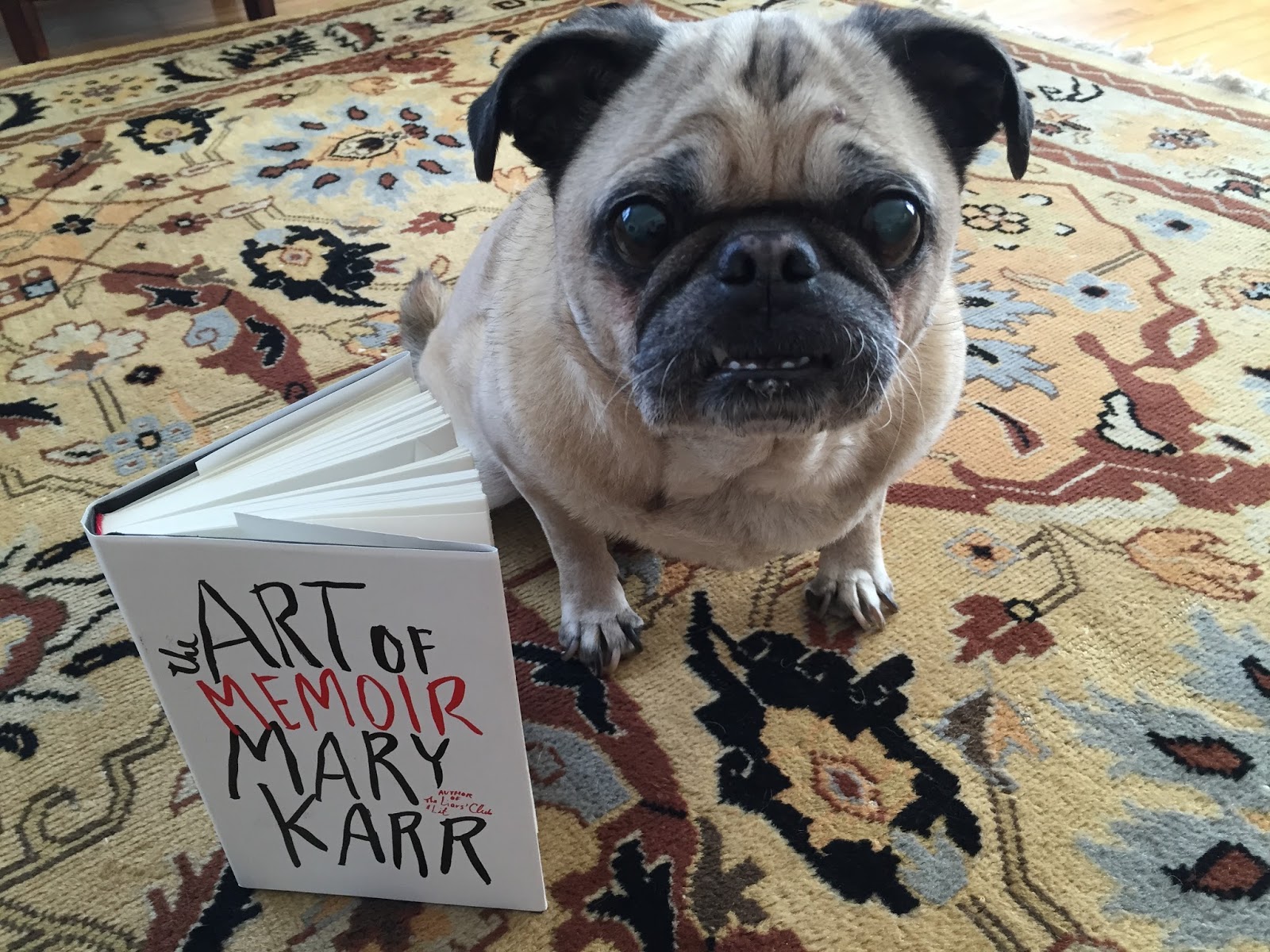
"The Art of Memoir": Why Our Stories Matter


"To bring oneself to others makes the whole planet less lonely.  The nobility of everybody trying boggles the mind." - Mary Karr

I've taken over a month off from my book blog.  I realized today that I miss writing, and opted to shirk the laundry piling up, the planning I need to do for my yoga classes, and the work that I need to complete for Stageoflife.com and to get back to writing.

I've read 5 books since I last posted, so there may be a deluge of book blog posts over the next 2 weeks.  Although I usually write my posts in the order I read books, I want to start with my favorite book that I read which was recommended to me by my best friend and one of our editors, "The Art of Memoir" by Mary Karr.

Oddly, I have never read any of Mary Karr's other books even though memoir is my favorite genre.  I owned "Lit" but gave it away right before we moved in Illinois. I remembered trying to start it once and not being able to get into it, so I carelessly tossed it into the "give away" box.  "The Liar's Club" was always on my list of "to reads" but I always found other memoirs to read before I purchased it.  After finishing her book "The Art of Memoir" and hearing her stories, being engaged by her voice, finding her vast knowledge of memoir writing awe inspiring, and feeling the tug to write more because of her book, I know that I need to read her memoirs to get to know her story even better.

As I often do before I post my own thoughts about a book, I check out what the "big guys" have to say about them.  "The Art of Memoir" received mixed reviews.  It made a few "best books of 2015" lists including Amazon's best book of September 2015, but it also got some reviews that called it "muddled" or "boring." In the New York Times Sunday Book Review, Gregory Cowels wrote, "It is not, alas, a very good book. Repetitive, unorganized, unsure of its audience or tone, it can’t decide whether it wants to be a how-to guide or a work of critical analysis." Yikes.  I agree with him that sometimes that book is messy, but so is life, right? Isn't that the strength of a good memoir, to make some sense out of the mess of life? Karr writes, "But I still feel awe for us - yes, for the masters who wrought lasting beauty from their hard lives, but for the rest of us, too, for the great courage all of us show in trying to wring some truth from the godawful mess of a single life." To me the mark of a good memoir is exactly that, and although I have never read a book about the art of writing memoirs, I do believe that Karr succeeds in finding truth in the process of writing about the truth of living messy lives.  

Drawing on her teaching syllabus, she weaves in and out of her own experiences of memoir writing and the craft of other well known memoir writers to explain what makes great memoirs great and what are the pitfalls of bad memoir writing.  She's not only funny, but she's also smart. Having three of her own best selling memoirs and having the prestige of a professorship at Syracuse University does not make her unapproachable.  Giving practical advice about how to deal with people that you write about in a memoir, and general rules of good writing (use sensory details - she calls them "carnal" details), Karr also includes a chapter called "Hucksters, the Deluded, and Big Fat Liars" basically saying when writers stretch the truth knowingly they suck.  It's way harder to strive to get the truth right and accurate because memories are tricky beasts.

The parts of the book that drew me in the most were Karr's own stories of writing attempts and failures as well as her victories.  She admits to not being the best writer, but being a "bull dog" of a revisionist searching for the best and most authentic details.  She discloses that she often had to write the wrong thing in order to clear the path to write the right thing.

What I loved best about this book is that it transcended writing memoirs and to me, was more about the search for our authentic selves.  When she asks questions like, "And most of all, how am I afraid of appearing? Go beyond looking bad or good. Is there posturing or self-consciousness you could duct or correct or confess and make use of?" These questions are about constructing identity, and revealing our authentic self by writing our truths in the best way that we can.  Why do people write? To tell the truth? To understand the truth? To get to the truth? Sometimes we need to write our past to make sense of what happened in order to be able to move on in the present. Sometimes we are lucky enough to connect with other people who benefit from our struggles - either the struggle of writing or the struggles that we lived to tell about in our stories.

This book isn't for everyone.  Some chapters delve heavily into to literary analysis of the memoir greats like Maxine Hong Kingston and Vladimir Nabokov.  The English teacher in me loved these chapters, but I can't see all readers enjoying them.  I, on the other hand, love people who are passionate about good writing and can see the craft of other writers as a gift.

My biggest take away after reading this book was to rekindle my writing self and to find my voice again on the page.  Sometimes I get so caught up in the minutia of life that I forget about this writer inside of me who wants to do more than just read books and post about them.  Karr helped me fall in love with writing again and see the beauty in the elusive craft of telling our stories authentically and truthfully.