Showing posts with label Cute pug and book. Show all posts

Monday, November 7, 2016

'Everything I Never Told You' by Celeste Ng: Not Just Another Gone Girl


“He can guess, but he won't ever know, not really. What it was like, what she was thinking, everything she'd never told him. Whether she thought he'd failed her, or whether she wanted him to let her go. This, more than anything, makes him feel that she is gone.”

Sometimes parents love their children so deeply and so much that they don't realize that they are smothering them.  The expectations we place on our kids are often from our own missed opportunities or things that we learned in life that we believe our kids need to learn in order to survive.

We don't mean to hurt them, but sometimes we love them too hard and just need to let them live their own lives by making their own mistakes and creating their own stories.

Celeste Ng's debut novel "Everything I Never Told You" adeptly studies the life of one family as they struggle to understand what happened to their daughter Lydia.  The book opens with the sentence "Lydia is dead." Although it might seem like an overdone opening to a cliched story line about the disappearance of a teenage girl, Ng's skillful writing is anything but cliche, and her characters are heartbreakingly flawed people who seem to be doing all the right things in a small Ohio town in 1977.  They are Harvard educated.  The parents are dedicated to the success of their children, Lydia, Nath and the often forgotten third child, Hannah.  The dad, James, is a college professor and he wants nothing more than his daughter to be well liked and for his son to get into Harvard.  The mom, Marilyn, devotes herself to helping her daughter  stand out academically - to be the best and the brightest and to pave a path of academia for her future.  She tells her "You have your whole life in front of you.  You can do anything you want."

Unfortunately, though, both James and Marilyn want too much for Lydia and never really see Lydia for who she might want to be.  Instead, both of them burden their daughter with what they always wanted in their lives.  James wants his Asian American daughter to fit in and not stand out, to be well liked and normal even amid the blatant racism in their Midwest small town.  Marilyn wants her daughter to be the best and the brightest just like she was before she sacrificed her own happiness to raise her three children.  She doesn't want her to settle.

Neither parent understands how putting their own struggles and past on their daughter essentially takes away her identity.

Selected as Amazon's Best Novel of 2014, and on NPR's and The New York Times' Best of 2014 list, Ng's novel glides through the aching landscape of a family torn apart - not just once by the disappearance of the mom, but twice due to Lydia's death.  It shows that some wounds don't heal and that even when we believe we are doing everything right, when our actions come from a place of past hurt, we often are doing more hurting than helping or healing.

This book was unanimously loved by our book club for the attention to details, the descriptions and the way the plot carefully unfolds.  We learn the depth of secrets, how quickly a family can grow apart, and the sadness that resides inside of each of us.  All of us liked, as well, that even in the melancholy and upheaval, hope exists.

To me, though, this novel sends a powerful warning to parents to let their children live their own lives and create their own stories.


Friday, October 14, 2016

"We Are Not Ourselves" by Matthew Thomas: One Family's Struggle with the American Dream and Alzheimer's


My best friend Cari and I have similar tastes in books.  When we taught high school together, one of us would rave about a book and the other would read it and then we would rave about it over lunch, or on a sushi date.  I saw her over the summer and explained that I was experiencing a reading drought meaning that no books that I read over the summer had really moved me enough that I could rave about them.  She shook her head and said, "Oh.  I have a book for you.  It will for sure move you." Although she forgot to give it to me before I drove back to Illinois, she mailed "We are Not Ourselves" by Matthew Thomas to my house.  I had a few other books to finish, before I tore into the 600+ pages of Thomas's highly acclaimed debut novel, but I couldn't wait.

The book begins slowly with the protagonist, Eileen Tumulty's hard life.  She's the caretaker of her Irish parents who succumb to alcoholism.  It isn't until Eileen meets Ed Leary, a promising scientist, that the book starts to wake up.  He seems an unusual choice for the hardworking Eileen, but when he kisses her at a New Year's Eve party, she knows she has found the one she wants to spend the rest of her life with.  After years of unsuccessfully trying to get pregnant, Eileen and Ed have a son who they name Connell.

After the first 100 pages of this book, I was captivated enough by the writing which is crisp and at times poetic, to keep going even though nothing significant happened.  These were rather ordinary people dealing with rather ordinary things in life.  But what I loved about Thomas's slow methodical storytelling is that the characters didn't need to impress me for me to be invested in their lives. I could feel the build up to something in the plot.  I could tell that the characters would change.

Eileen's chilly and tough demeanor reminded me of many women in my life.  She's kind to a point, but doesn't reveal much.  She works hard unapologetically, but she dreams of a more cushy life and urges her husband to strive for greatness at work - get more titles, take a promotion, switch universities.  She wants to move into a better neighborhood and becomes obsessed with finding a dream home for her family.  Ironically, once she finds the dream home (which is described as less than dreamy even though the location is ideal), her whole life unravels.  Ed is equally as perplexing as a character.  He is so soft and gentle with his son and so caring with his wife even when she is hard and unfeeling, that he creates a lovable foil to her.

About half way through the novel, Ed's memory is slipping.  He gets calls from the college where he works because students have started to complain.  He'll sit with headphones on for hours because his brain is "hazy" and he wants to get back to basics.  When Eileen finally has had enough and takes him to the doctor, they receive the cruel diagnosis of early onset Alzheimer's disease.  Ed is only 51 at the time of diagnosis, and Eileen wants to fight to keep him well and at home for as long as possible.  She hides it from his boss and even when she knows that keeping Ed safe is beyond her capabilities despite the fact that she is an amazing nurse, she still fights to keep him at home with as much dignity and grace as she can allow.

At this point in the journey with the Leary family, my heart broke for all of them.  Connell was too young and too selfish and too unskilled with emotions to deal with the care that his father needed.  Eileen was too unyielding to give in to the complete dissolution of her life dream.  Thomas meticulously describes each failing memory, each loss of human dignity that Ed suffers.  We see this largely from the perspective of Eileen, but one of the most heartbreaking scenes of the novel is when Connell tries to take care of his father for the day while his mother is working, and his father soils himself. Connell cleans him and again tries his best to deal with not only the physical and demeaning work of the clean up, but also the emotional toll that his father's illness has taken.

It isn't just the slow insidious decline of Ed's mental faculties that kept me reading.  I wanted to know how an ordinary woman would deal with the tragedy of losing her husband to Alzheimer's.  I wanted to know how her son would deal with the guilt and the loss of his father.  Although I have read many books about Alzheimer's, Thomas's novel delves deeper because of the slow build up to the life that Eileen wanted.  We get to know her American Dream, and how she was so close, but how quickly life can change.  As the reader, we get to see the daily discoveries of loss, the daily hope and the daily disintegration of the future that was in reach, but will never be fulfilled.

Ultimately, though, in all the bleak of this novel, it does not end up feeling like a tragedy.  Eileen changes.  Connell changes.  Ed, well . . . poor Ed.

It took me longer to love this book than I thought I would, but I will be thinking about the Leary family for quite some time even though I finished reading it today.  To me, this book has all the makings of an American classic and it deserves the distinction on the New York Times 100 Notable Books of 2014.

Tuesday, June 28, 2016

"A Man Called Ove": Hard on the Outside, Soft on the Inside

“Ove is fifty-nine. He drives a Saab. He’s the kind of man who points at people he doesn’t like the look of, as if they were burglars and his forefinger a policeman’s flashlight.”

We all know one curmudgeon or two in our lives.

These cantankerous individuals grumble at insignificant things that they really can't change.  Just the other day when I was at the local Jewel, I stood behind an angry older man who decided to lose his anger on the unsuspecting cashier.  He waited in line too long to buy his bottles of seltzer water and he wanted answers as to why they recently removed the self checkout aisles.  His words were condescending and rude, and he wanted very much to prove the point that he considered every employee at Jewel an idiot.

When I met the main character Ove of Swedish writer Fredrik Backman's debut novel "A Man Called Ove" I was reminded of every curmudgeon that I met while working on the farm (where they were rampant going as far as returning a quart of strawberries because they weren't juicy enough), or while I waited tables through college.  I thought of past colleagues when I was a teacher and even some family members.

Ove is the kind of man who sticks to his routine without fail.  He has black and white ideas about the types of people he likes (those who drive Saabs like he does) and those who he does not (those who are unable to back up a trailer or computer salespeople or those who drive on a on a motor vehicle prohibited street which is clearly marked or especially anyone who drives a BMW).  He walks around the neighborhood spreading more complaints than joy and everyone seems to be able to ruffle his 59 year old, cranky feathers.

But, everyone has a story to tell about how their past influenced their present day emotional status and Ove's story is one of sadness and hardship as well as love and companionship.  He grew up to be a man of principles and little compromise on his hardened belief system until he met the love of his life, Sonja, who was able to see the beautiful person that he was inside.  Their love story is full of touching moments. "People say Ove saw the world in black and white.  But she was all color.  All the color he had." Even when someone finds the perfect mate, life has a way of not turning out the way you expect it and Ove's life hardened him until his outer shell was so thick he didn't even want to go on living.

And that is where the reader meets him - when he's at the end of his rope from life's stupidity and outrage, missing Sonja's color in his life of black and white.  He would rather cease to exist than go on living.  At least that is what he believes.  When his new neighbors move in - Parvaneh (the pregnant mom), the dad (who Ove just names The Lanky One), and their two daughters - Ove's whole life begins to change.

I don't want to give away too much about this novel, because the real joy stems from the way Backman skillfully unfolds the backstory and present day story of Ove simultaneously.  At first I was irritated by Ove's unbending ways, but by the middle of the book, I couldn't wait to read more about his past and see what other circumstances would surface in the present.  Quite a few moments made me laugh out loud or smile.

And, yes.  I did shed a tear or two (maybe way more than that).  I love a good story about how even the hardest of hearts can soften (just think about how you watch The Grinch Who Stole Christmas or A Christmas Carol every single year), or how many people who seem like the grumpiest recluses are really the ones who have a history of good deeds and who are the most helpful in a crisis.

Redemption, friendship, love, a stray cat, an amazing cast of neighbors, a grumpy old man bent on ending it all, and the beauty of owning a Saab all combine to make "A Man Called Ove" one that might make you rethink your internal remarks about the crabby old men who yell at the cashiers in Jewel.  It will remind you for sure that everyone has a story to tell.


Wednesday, June 15, 2016

"Chains": Another YA Historical Fiction Victory for Laurie Halse Anderson


An Important Note: It has taken me awhile to muster the courage to return to my book blog.  My loyal friend and office assistant, Loki, passed away on May 26th 2016.  I've never had a dog that I loved like Loki, and it has been so much quieter and a little less joyful now that he isn't at my feet every day while I work.

But as in all things, life goes on, and whenever I see the stack of books that I have already read, the pictures of Loki with all those books (he absolutely loved to pose with books because he always got a special treat afterwards.  I only had to hold a book and my camera and he would run to a good spot and pose) and have yet to write about, I am reminded that it's okay to move forward even if it hurts a little.

___________________________

As I have mentioned before, my daughter, Raina and I have our own book club.  There are only two members (the two of us), and we try to read a variety of books that we think are worth discussing.  A few requirements:
1) the book has to be something we both want to read
2) the book has to be one that neither of us have read (or if I have read it, it was so long ago that I don't remember it)
3) the book has to be substantial enough that we have something to talk about
4) we need to go out to dinner somewhere to discuss the book

For our third selection, we chose Laurie Halse Anderson's National Book Award Finalist, "Chains." Both Raina and I read Anderson's Fever 1793 and loved it, so we thought another glimpse into early American history would be a good bet for both of us.  Raina also decided that we needed to have our discussion dinner at the local restaurant, 1776 (clever, right?). Neither of us were disappointed by the harrowing insider's perspective of slavery in 1776 that Chains depicts (or with our dinner at 1776).

The story revolves around a 13 year old slave girl named Isabel and her sister Ruth.  When their mistress dies, her will states that the girls whose mother also died are to be set free.  Unfortunately, two young slave girls don't have control over their fate in 1776, and their former mistress's nephew refuses to consider that Isabel and Ruth are not property on which he can make a profit. Dismissing the fact that Isabel is able to read and read the will herself, he sells the sisters to a very wealthy Loyalist couple, The Locktons.

To say that the girls suffer under the ownership of Mrs. Lockton would be an understatement.  She takes an instant liking to Ruth, but casts her aside thinking she is infected with the devil after she has a series of seizures.  As much as Mrs. Lockton immediately likes Ruth, she feels the same in disdain for Isabel and makes it her sole mission to inflict pain and punishment on the independent, headstrong girl.

With heart racing suspense and uncomfortable torture scenes, Laurie Halse Anderson creates the tense world of life from the perspective of a young slave girl caught in the middle of Loyalists and Patriots at the advent of the Revolutionary world.  She explores the depths of torment and imprisonment as well as lofty ideals of loyalty and freedom.

Over a sea scallop spinach salad (say that 10 times fast) and a wood fired chicken pesto pizza, Raina and I both agreed that this was a great book that taught us so much about the life of a slave girl. Both Raina and I squirmed when Isabel was publicly branded for trying to escape.  We both loved the  relationship between Isabel and Curzon which showed that even in the most dire of situations, a friend is exactly what you need.  And, we also loved that Mr. Lockton's aunt looked out for Isabel and helped her to survive.

Raina thought that many parts were a bit slow, but ultimately that she really enjoyed this book.  She also thought that it was awesome that it took her deeper into the dynamics of the start of the Revolutionary War than what she learned in Social Studies at school.  I thought it was an amazing gazing ball into a tumultuous time in US History.  What I love so much about Laurie Halse Anderson is her attention to the historical accuracy of her historical fiction.  She included quotations from actual documents from the time period that coincided with what was happening in the story.  I can't remember ever being engaged in learning about the Revolutionary War when I was in elementary school, but if I had read this book, I am sure that I would have been captivated and wanting more information.

The best part of this book is the action packed ending which really isn't an ending at all because this is only part 1 of the Seeds of American Trilogy.  Although we aren't going to choose Book 2: Forge for our next book club book (we both decided that we needed something a little bit lighter for the summer), we both will read it as well as Book 3: Ashes (out in October 2016) because we need to know what happens to Ruth, Isabel and Curzon.

We are rooting for them!


Wednesday, May 18, 2016

"Circling the Sun": Into Africa With a Fearless Heroine


We’re all of us afraid of many things, but if you make yourself smaller or let your fear confine you, then you really aren’t your own person at all—are you? The real question is whether or not you will risk what it takes to be happy.

Beryl Markham's prophetic statement "I could come through nearly anything my world might throw at me" after being nearly mauled by a neighbor's pet lion, becomes her mantra for a life of adventurous tumult.

In Paula McClain's "Circling the Sun" McClain delves once again into a novelized memoir like her huge success "The Paris Wife," the fictionalized autobiography of Ernest Hemingway's first wife, Hadley Richardson.  Instead of focusing on expats behaving badly in New York during the 1920s, this time McClain sets her sites on expats behaving badly in a more wild and earthy backdrop, Kenya before it was Kenya.

"Circling the Sun" follows the unflappable Beryl Markham, the first woman to fly solo, east to west, across the Atlantic.  Her 1942 memoir "West with the Night" came to fame when Ernest Hemingway raved about it and the writing prowess of Markham.

McClain's account of Markham follows more of her upbringing - moving with her family from England when she was 2 years old to the untamed landscape of a 1,500 acre farm in Kenya.  Her father was a distracted farmer who was better at horse training and her mother was neglectful and unsuited to the African wilderness and subsequently leaves Beryl and her father.  Beryl's childhood is far from ordinary.  She learns to spear fight with the local tribe boys and runs free on her father's ranch.  She's fearless and headstrong.

Her life continues to throw obstacles in her path from poverty to a loveless marriage to a jealous and cruel drunk to being exiled and giving up a baby, and she navigates each with grace - each tragedy that could destroy an ordinary person only serves to strengthen Beryl's resolve to live life her own way. She becomes the youngest and only female race horse trainer in Kenya, and she also becomes a famous female pilot.

The novel focuses heavily on Beryl's love interest - the womanizing, poetry spouting, large game hunter, Denys Finch Hatton who Robert Redford played in "Out of Africa." Karen Blixen (aka Isak Dinesen) loved him much the way that Beryl did.  He was a commitment phobe who used women for his own purposes, but that didn't stop Beryl's infatuation and pursuit of Denys.

It is Hatton's love of flying that draws her to it, and leads to her to pursue it even after Denys dies in a tragic airplane crash.

The novel is easy to read with beautiful imagery of the untamed African wilderness throughout.  It's ambitious with a rowdy cast of secondary characters who are for the most part historically accurate in their depiction. I did get a little bit restless by the end of it feeling as if McClain was hurrying through the years too quickly or maybe trying to do too much and was running out of room to finish.

Overall, though, I was caught up in the romantic sun drenched Kenyan landscapes, and the unflinching life of a very strong woman whose mere presence felt magnetic.  If only all of us could use the tragedies of our lives to build us stronger than weaker.  And if we could learn to live our own lives vs. follow what everyone else deems appropriate for us.  Beryl Markham will remind you what it means to live your life out loud.

Friday, April 29, 2016

"Preparation for the Next Life": An Achingly Gritty Love Story


But, he said, you cannot have these beautiful things if you lead a bad life, if you are sinning, doing what you want.  of course you must live properly and obey the law.  he pointed at the bilingual Arabic and English sign over the mosque's doorway, which he read aloud for her.  It said Preparation for the Next Life. 

Sometimes reading a book hurts.

Atticus Lish's highly praised debut novel "Preparation for the Next Life" might just break your heart. It might make you rethink The Patriot Act.  It might make you understand the endless cycle of tragedy that many veterans face.  It might make you consider the plight of illegal immigrants who only want to work hard and find a way in to the American dream.  It might make you ponder what real love means, and sacrifice, and poverty, and PTSD, and prison release, and justice.

I'm still thinking about the edgy story of Zou Lei, an illegal immigrant from Central Asia, who only wants a better life, but finds instead a dirty mattress in a New York tenement building that redefines living in the slums.  She meets Skinner who is fresh off of his third, violent tour in Iraq.  While she wants to work and make New York City her home and prove that she can make it as an American, he wants to find a good time and forget the lost friends and exploding life in Iraq.

Their story broke my heart.

Skinner isn't a bad guy, but his circumstances made it hard for him to be a good guy.  He suffers from PTSD and suffers even more from the neglect of the U.S. Government after he served 3 tours in Iraq. Drinking, drugs (prescription and non-prescription), smoking and pornography cloud his days spent in a small basement apartment in Queens.  Zou Lei tells him "Something has shook your mind.  It could be some bruise inside the head." Maybe that is why he chooses the terrible place to reside where he's only asking for trouble due to his landlady's  ultra violent son, Jimmy who recently was released from prison.

Zou Lei and Skinner fall in love even though she is older than he is, even though she is an illegal immigrant, and even though he is sometimes very mean and rough with her.  They bond over an almost spiritual love of hard workouts.  She loves to run (which comes in handy for her many times throughout this novel) and he loves to push his body over his edge with weightlifting.

Lish's style is jarring and coarse and at times hard to slog through.  Each sentence is densely packed with details.  There are no quotation marks for dialogue and everything in this novel is grim, depressing and violent.  At times the song "Skid Row" from the musical "Little Shop of Horrors" popped in my head, but even skid row is too happy of a place for Skinner and Zou Lei who can't get a break regardless of how much they try.  And they do try to get ahead, but life and circumstances don't always allow them to get where they want to go.

It's a tough read, but I was reminded of Ken Kesey and his rambling "fog" chapters with the Chief in "One Flew Over the Cuckoo's Nest." There is power in the rambling stream of consciousness writing style of Lish and the book needs the grittiness of the prose to tell the story truthfully.

Life isn't always beautiful, and this book is a harsh reminder of that brutal reality.


Tuesday, April 19, 2016

"A Monster Calls": Letting the truth loose


"Stories are wild creatures," the monster says.  "When you let them loose, who knows what havoc they might wreak?"

Back in the summer of 2011, I attended a Summer Writing Institute at Millersville University.  The professor in charge of the whole institute recommended the book 'A Monster Calls' by Patrick Ness to all of us.  I paged through it when she passed it around for us to inspect; it looked dark, and creepy - a twisted childhood nightmare.

It's not that at all.

This book is one that I will be recommending to everyone, and one that I am so glad my daughter, Raina, and I chose for our 2nd mother / daughter book club selection.

I finished it in a day.  Raina (who is now in 5th grade) finished it in about 3 days.  We both loved it.

The premise of the book is that thirteen year old Conor is visited by a giant yew tree monster different from the monster in his reoccurring nightmares.  The visiting monster tells Conor that he only comes walking in matters of life and death.  Conor's mother has been very sick so Conor believes the monster is there to save her, but in reality what the monster wants more than anything is for Conor to tell the story of his truth.  When the clock strikes 12:07,  the monster comes walking and shares 3 separate stories with Conor that explore the complexity of human beings.

Big questions of evil and good, invisibility and loneliness, loss and pain, the power of holding on to our beliefs, betrayal, revenge, and telling the truth resonate through this beautifully crafted novel.

The story itself was inspired by Siobhan Dowd, who died from cancer before she was able to write it. Ness does her story incredible justice and 'A Monster Calls' won both the Carnegie Medal for literature and the Kate Greenaway Medal for Illustration (the illustrations by Jim Kay are haunting and absolutely perfect for this novel).

Raina and I decided to go out for sushi (which she discovered that she loves on our trip to Mexico ).  At first she was distracted by the activity or people pouring into our favorite local sushi place, Kumi.  But when we started uncovering the layers of the monster's 3 stories, she got her quizzical look on her face and asked important questions and gave insights into what she believes in situations where the truth is involved.  We discussed at length when it is important to lie to yourself and when it is important to tell the truth because the monster tells Conor "Sometimes people need to lie to themselves most of all." Most people in the book (with the exception of the monster) lie to Conor possibly to protect him, but it is only to his detriment.

I don't want to give the entire story of this book away, so I will stop gushing about it.  Know that it is short.  It isn't necessarily a happy book, but there are moments that the banter between the monster and Conor might make you smile.  You also might cry, but I don't think this book will give you nightmares of any sort.  It will stick with you after you finish it. And, it will make you think deeply about the complexities of the human spirit; we often have contradictory thoughts, but it is our actions that are most important of all.


Wednesday, April 6, 2016

"The Vacationers": A Book to Take On Vacation


I just returned from a fabulous vacation in Playa Del Carmen, Mexico.  Living in Chicagoland means that weather through April is iffy at best.  One sunny day of 65 degrees can easily transgress into a snowy day of 39 degrees.  On Saturday (the day we returned from Mexico where the weather was 85 degrees and sunny every day), Mother Nature melted down with one huge 24 hour tantrum.  It rained, it snowed, the sun came out, and then we even had thundersnow before the winds started punishing us for being human.

Because I was lucky enough to rejuvenate in Mexico, the tantrum didn't bother me.  I stayed inside and snuggled up next to the fire with a big cup of coffee and finished the second book that I took with me to Mexico - Emma Straub's novel "The Vacationers."

I admit that I purchased the book because of the pretty cover with the people floating in a pool of aqua blue (my favorite color).  It's a shallow reason for purchasing a book, but it called to me on the table of recommended reading at Barnes and Noble.  I'm so glad it did, because from the first chapter I was addicted to the story of the Post family's two week vacation to Mallorca, Spain.

The Posts are a family in crisis.  Jim, the 60 year old Post patriarch, recently retired from his job as Editor at the magazine Gallant, and spends his days moping around the house.  His early and abrupt retirement stemmed from his affair with a 20 something intern named Madison.  She tempted him and he gave in to her youthful seduction and was "let go" by the board.  His wife, Franny who is a food journalist and loves to cook, vows to never forgive him his transgression.  Their daughter, Sylvia, a petulant college bound slacker is saddened by her parents, but even more disgusted by her gym rat brother, Bobby, who has become a Miami stereotype - a muscle clad, club hopper who hates his real estate job and is indifferent to his cougar girlfriend, Carmen.  No one in the family enjoys Carmen's company because her thoughts veer to physical fitness all the time and she shares no common interests with the cultured Posts.

Along with the four Posts and Carmen, a gay couple, Charles and Lawrence join the family for this two week getaway.  Charles is Franny's oldest friend and confident and his decade younger husband, Lawrence is set on adopting a baby.

Once they arrive in Mallorca, the tensions and truths start to come out.  All of the Posts and even Charles and Lawrence must deal with infidelity in some way throughout the 14 day stay (the book's chapters are divided by the days - 14 chapters for the 14 day vacation).  Sylvia is still reeling from her kinda sorta boyfriend's betrayal with her best friend, and Bobby gets into predicaments because he doesn't want a long term commitment to Carmen.  Even Charles and Lawrence must deal with infidelity.

The men in the book are a bit drab with the exception of Sylvia's Spanish Calvin Klein model tutor, Joan (pronounced Jo-ahhhn).  Jim's sullen sulkiness becomes redundant, and Bobby's adolescent behavior is boorish.  Charles and Lawrence are almost indistinguishable.  Sylvia, Franny and Carmen add some spice to the book, but oddly the ones that are supposedly unlikable become likable.  Franny bugged me more than Jim.  Sylvia was more annoying that Bobby in parts.  And Carmen, the one the family liked the least, was at times the most genuine and likable character in the book even if her whole life revolved around the next workout and protein shake.

Nonetheless, the setting in the mountains of Mallorca along with the conversations and thoughts of the characters and their dinners together (tense and delicious), were enough to sustain a great narrative revolving around growth.

How do you move on after failure and heartbreak? How do you start the next phase of your life? How do you know for certain when it's time to move on in a different direction? All of these questions are central to this story and Straub is able to equally capture the tension and the wit in delicate family situations.

Even with the too quick wrap up at the end of the novel which seemed less than real, the rest of the story pulses with the times in life where we are conflicted with who we are and what decisions we need to make to move forward.  And who doesn't love a vacation story that ends well (especially when reading a book about a vacation on a vacation)?


Wednesday, March 16, 2016

"Bone Gap:" Original and Fresh YA Magical Realism


Before I get too far into this, I must admit that "Bone Gap" by Laura Ruby was VERY hard for me to get through.

It's not because this book isn't a book one it's more that I am not a fan of magical realism.  I prefer my reality to stay reality and my fantasy to stay fantasy.  When everything gets twisted together I get somewhat agitated.

But here's the deal -
Ruby's book is original.  It's fresh.  It's lyrical and it has stayed with me.  It was a National Book Award Finalist as well as a Printz Honor Winner and those awards and numerous accolades make sense.

At the center of the story are two brothers - Sean and Finn O'Sullivan who live on their own after a tragic accident that took the life of their father and then the subsequent departure of their bereft mother.  Sean vows to take care of his younger brother, Finn, who is odd even for a small town full of a menagerie of trippy characters.  Finn is often beat up by the Rude brothers and called "Moonface" or "Sidetrack" because of his spaced out demeanor.  His saving grace seems to be that he's beautiful just like his mom.

When a gorgeous Polish woman named Roza suddenly turns up in their barn with injuries and no story, the brothers quickly fall in love with her - one in a romantic way and the other in more of a brotherly sort of way.  When Roza suddenly disappears one year later, no one wants to believe Finn's story that she has been taken by a man whose face he can't describe.  Sean believes that everyone wants to leave them, but Finn knows that they need to find her and save her.

Based on the tale of Persephone who gets taken by Hades into the underworld, the realism of small town life gets tangled with black mares, pomegranate cookies, barren gardens, talking corn fields, and prosopagnosia.  Ruby's own poetic style interspersed with a honey laden, young love story make the novel even more dream like.

I appreciate the craftsmanship of the complexities and layers of this tale.  At it's heart is love and how we view the people that we fall in love with and who love us back, and how that changes the way we view ourselves.  It's also about the interconnectedness of small town life full of gossip and secrets - the gaps we fill with stories and those that we leave open for others to discover, as well as the gaps that sometimes swallow us whole. When Charlie Valentine tries to explain the mysteries of Bone Gap to Finn he tells him, "Because we don't have your typical gaps around here.  Not gaps made of rocks or mountains. We have gaps in the world. In the space of things. So many places to lose yourself, if you believe that they're there.  You can slip into the gap and never find your way out.  Or maybe you don't want to find your way out."

It's quite beautiful when I think about it, but I slogged through the reading of this novel vs. enjoying the tale unfold. At times I thought I should abandon it in favor of the other books in my towering bedside stack.  But I stuck with it, and I'm glad that I did because I keep thinking about the story and the characters, and I want to read more about Persephone.

If you want something that isn't ordinary or expected, with a mystery, a love story, and a modern twist on a mythological tale, "Bone Gap" is going to be your new favorite book.

Monday, February 22, 2016

"The Giver": A classic dystopia


My daughter Raina and I started our own two person book club.  On Friday, we had our first meeting at Marzano's, a wood fired pizza place, to discuss our first selection, Lois Lowry's Newbery Medal winner, 'The Giver.'

Raina reads just as much if not more than I do.  Most nights my husband and I need to repeatedly ask her to close her book and get to sleep.  Sometimes after we have gone to bed, she gets back up, and takes her book under her covers to finish it.  When the Book Fairs come to school, she is in heaven; she plans her purchases and after she has reached the limit I set, she dips into her own precious savings and goes on her class "buy day" and purchases every other book she was unable to get.

I knew all this, but I still wasn't prepared for how amazing it was to have a real adult conversation about a complex book with my 11 year old.

She's smart, analytical and quizzical.

Her analysis of the complex topics presented in the book were spot on.

If you are one of the few people who has never heard of "The Giver" or you haven't read it, it follows a boy named Jonas who lives in a utopia.  Everything is fair.  No one feels pain.  No one fights.  No one needs to make any choices because everything is decided for you.  There are special, all inclusive ceremonies for age groups.  All 9 year olds have a bike ceremony, and all 12 year olds have a special ceremony where they are given their assignments (jobs) in the society.  At the assigning ceremony, Jonas is named the new Receiver and needs to attend special top secret meetings with the current Receiver.  It is there, he begins to learn the truth about his world.  And the truth isn't pretty.

Raina and I discussed topics in the book ranging from euthanasia to what it means to be a family.  We talked about euphemisms and why people use them and we discussed the ambiguous ending of the book.  Raina blew me away when we talked about language being controlled and about the nature of love and why a society might want to take away the power to love.

It was an amazing conversation and it made me appreciate my daughter as the unique and intelligent young lady that she is; I am so proud to be her mom.

Choosing 'The Giver' as our first book to discuss was perfect.  At first when Raina started reading it, she told me, "Mommy, this book is a real snoozer." I told her to stick with it because it picks up and gets very interesting at chapter 7. She stuck it out and just as I suspected when she got to chapter 7, she was hooked.  We even talked about how some books that have slow starts can still be awesome to read and the pay off can be even better than books that are quick to get through.

'The Giver' is a classic YA dystopia that even reluctant readers would enjoy (especially after they get through the first 6 chapters), but even more importantly, it presents so many important discussion points about the ways societies are run and individual rights, the importance of memories - good ones and bad ones, and why love can save us.

I highly recommend not only reading 'The Giver' but also reading the books that your kids are reading so you can talk to them on a literary level.  I loved my first book club outing with my daughter.  I can't wait for the next one.


Thursday, February 11, 2016

"Big Magic": A Beautiful Reminder To Create


And while the paths and outcomes of creative living will vary wildly from person to person, I can guarantee you this: A creative life is an amplified life.  It's a bigger life, a happier life, an expanded life, and a hell of a lot more interesting life.  Living in this manner - continually and stubbornly bringing forth the jewels that are hidden within you - is fine art, in and of itself. 

Because creative living is where Big Magic will always abide. - Elizabeth Gilbert


Sometimes so many people recommend a book to me that my only choice is to read it.

Elizabeth Gilbert's "Big Magic: Creative Living Beyond Fear" is one such book.  When I saw that it was featured as a signed book at Barnes and Noble for Christmas, I gently suggested to my husband that it might be a book that I would love to see under the tree on Christmas morning.  He listened and it was mine.

Unlike most books that I get for Christmas, I waited to read this one until I was ready to fully take it in.  I read it with a pencil in my hand to underline important passages and to let Elizabeth Gilbert's message really sink in and resonate with my soul.

My reader relationship with Elizabeth Gilbert is hot and cold.  The book that propelled her to success, "Eat, Pray, Love" was good, but definitely not one of my favorite memoirs.  At times her story of self discovery during her world travels really mattered to me, but at other times I felt completely disconnected to her journey.  I felt the same thing with "The Signature of All Things."  I really, really loved parts of it, but other times I found myself flipping pages to just get it done.

Regardless of this relationship with Elizabeth Gilbert, her Ted Talk titled Your Elusive Creative Genius is one of my favorites of all time.


So I figured that an entire book dealing with the same subject matter would speak to me.  

And it did. 

Gilbert's conversational tone throughout the book drew me in immediately.  It was as if she was talking to me as a friend, a confidant, a fellow creator on this planet who has a voice and a message and doesn't always know how to use it.  She tells stories of her own creative process, her failures and her successes.  

My favorite part of the book was when she explained that ideas are living entities that are waiting to find a medium to bring them into the world.  "Remember: All it [an idea] wants is to be realized.  It's trying its best.  It seriously has to knock on every door it can." She illustrated this point by recounting a book idea she had.  It was set in the Amazon and included an adventure for a reluctant heroine named Evelyn whose ordinary life gets overturned when she travels to Brazil to recover a missing young man.  Gilbert had to side track this idea even though it was bought by her publisher. 

Life happened and she neglected this book idea, and then several months later, she attended a panel discussion about libraries and met Ann Patchett.  They formed a strong friendship that was forged mostly through old fashioned letter writing.  In one letter, Ann mentioned her new book idea which was about an adventure in the Amazon jungle.  When they met for lunch a few weeks later, Ann told her more about the book idea which was so similar to her own that she got chills.  She realized that her idea got impatient and jumped to Ann who could realize the idea's full potential.  Ann wrote the widely renowned book "State of Wonder" which essentially was Elizabeth's idea.  Sometimes if we wait too long, an idea will do what it needs to do in order to be brought to fruition.  

From this story, Gilbert goes on to talk about her own journey with writing- how she was persistent even when she didn't feel like she was any good at writing.  When she got rejections, she would work harder, and she never quit her day job nor did she go through a fancy MFA program.  She worked hard and listened to ideas as they came to her.  

At times Gilbert does get a little preachy, but overall, she remains true to her message that creativity is a beautiful gift and that all of us need to create, even if it's just for ourselves.  Even more she says that if you create with only your audience in mind, you are doing yourself a disservice.  Create because you can and then maybe your message will reach others in ways that you don't even anticipate just like her success with "Eat, Pray, Love" which she really wrote in order to work through her own emotional turbulence.  

For anyone that ever wanted to create but was afraid to do it, and for anyone who lost their way as a writer but still feels like they have something to say - pick up this book which is a beautiful reminder of why we should uncover the jewels within us and bring them to life. 


Wednesday, January 20, 2016

"I'll Meet You There": A Tender Love Story


" . . . if you could make a beautiful piece of art from discarded newspapers and old matchbooks, then it meant that everything had potential.  And maybe people were like collages - no matter how broken or useless we felt, we were an essential part of the whole.  We mattered." 

Love matters.

It's getting closer to Valentine's Day, and although many people aren't all about it, I must admit that I am sucker for a good romance.  Maybe because my husband and I were high school sweethearts, I especially love to read YA books that are both realistic and romantic.  Heather Demetrios' 7th novel "I'll Meet You There" was a tender, coming of age love story that revolved around two broken teenagers growing up in the dead end fictional town of Creek View, California.

The alternating voices in this novel come from Skylar Evans (17) and Josh Mitchell (19).  Both of these characters share the common denominator of their job at The Paradise Hotel, one of only a few businesses in Creek View (others include a gas station and Taco Bell).  Skylar can't wait to escape the stereotypical fate of every girl in Creek View - pregnant by age 19 with a part time job at Taco Bell.  She just needs survive one final summer before she can go to SFU on scholarship.  Unfortunately, her mom loses her job and falls into a deep depression and delves into her alcoholic ways again. Skylar can see her dreams of leaving falling away with each drop her mother drinks.

Josh, a womanizer and party guy, has just returned from a tour in Afghanistan where he served as a Marine.  When Skylar first sees him at a party, she realizes that he hasn't just changed physically because his leg was blown off while in Afghanistan, but something seems different, maybe even softer about his overall persona.

With their broken families, broken dreams, and futures uncertain, this unlikely pair bonds together in a friendship that ultimately becomes something neither of them are completely prepared to experience. But what they do encounter together is often heart wrenching, honest and head swooning, awwww inducing love.

Although there are almost too many twists at the end of this book, the love story itself is enough to make the high praise that this book has received understandable.  Both Sklyar and Josh are beautifully crafted characters that don't want to succumb to the fates of other Creek View-lings and both of them feel like they will be stuck there forever even if they don't belong there.  Even if they have tried to leave.  Because of their circumstances and their seemingly insurmountable differences (Skylar is a scholar and an artist who has remained chaste and innocent in a town that does not encourage that, and Josh is a womanizer who has slept with most of the town and seems destined to fall into the same routines he established before he enlisted in the Marines), their surprising romance feels breathless and right.  Skylar recognizes their similarities after she tries to push Josh away.  She thinks, "It occurred to me that we were the same, in a way.  Both of us treading water, pushing against forces we couldn't control." They are drawn to the brokenness of each other and through their relationship they both begin to heal their past and present scars.

Reading young love that feels real is a beautiful thing.  It's complicated and it hurts to read when they make big errors in judgment as they navigate the tricky path to each other, but the end result in Skylar and Josh's story is worth the read.  If you are looking for a touching embrace of a love story as Valentine's Day draws closer, this one might be the one.

Tuesday, January 12, 2016

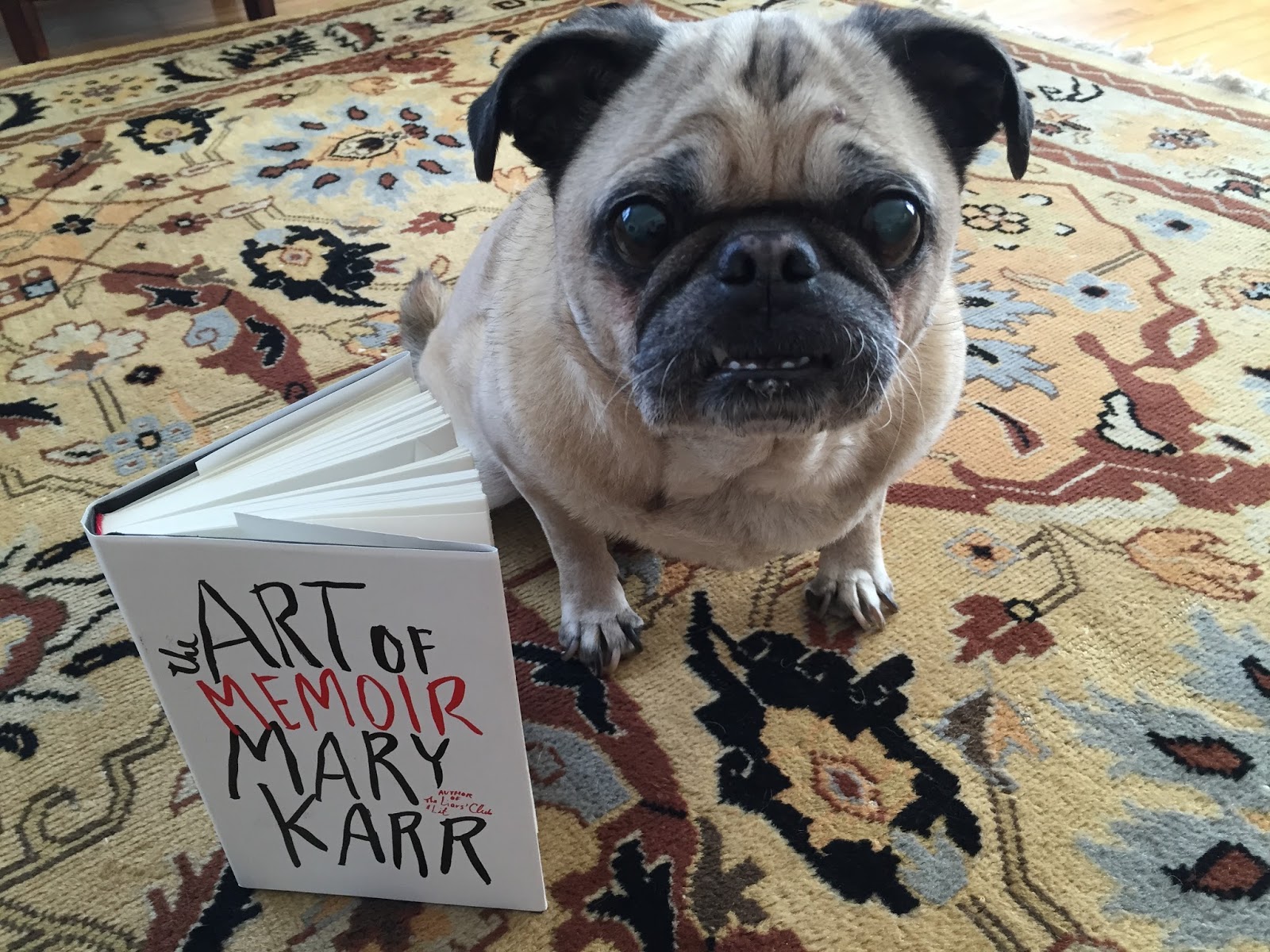
"The Art of Memoir": Why Our Stories Matter


"To bring oneself to others makes the whole planet less lonely.  The nobility of everybody trying boggles the mind." - Mary Karr

I've taken over a month off from my book blog.  I realized today that I miss writing, and opted to shirk the laundry piling up, the planning I need to do for my yoga classes, and the work that I need to complete for Stageoflife.com and to get back to writing.

I've read 5 books since I last posted, so there may be a deluge of book blog posts over the next 2 weeks.  Although I usually write my posts in the order I read books, I want to start with my favorite book that I read which was recommended to me by my best friend and one of our editors, "The Art of Memoir" by Mary Karr.

Oddly, I have never read any of Mary Karr's other books even though memoir is my favorite genre.  I owned "Lit" but gave it away right before we moved in Illinois. I remembered trying to start it once and not being able to get into it, so I carelessly tossed it into the "give away" box.  "The Liar's Club" was always on my list of "to reads" but I always found other memoirs to read before I purchased it.  After finishing her book "The Art of Memoir" and hearing her stories, being engaged by her voice, finding her vast knowledge of memoir writing awe inspiring, and feeling the tug to write more because of her book, I know that I need to read her memoirs to get to know her story even better.

As I often do before I post my own thoughts about a book, I check out what the "big guys" have to say about them.  "The Art of Memoir" received mixed reviews.  It made a few "best books of 2015" lists including Amazon's best book of September 2015, but it also got some reviews that called it "muddled" or "boring." In the New York Times Sunday Book Review, Gregory Cowels wrote, "It is not, alas, a very good book. Repetitive, unorganized, unsure of its audience or tone, it can’t decide whether it wants to be a how-to guide or a work of critical analysis." Yikes.  I agree with him that sometimes that book is messy, but so is life, right? Isn't that the strength of a good memoir, to make some sense out of the mess of life? Karr writes, "But I still feel awe for us - yes, for the masters who wrought lasting beauty from their hard lives, but for the rest of us, too, for the great courage all of us show in trying to wring some truth from the godawful mess of a single life." To me the mark of a good memoir is exactly that, and although I have never read a book about the art of writing memoirs, I do believe that Karr succeeds in finding truth in the process of writing about the truth of living messy lives.  

Drawing on her teaching syllabus, she weaves in and out of her own experiences of memoir writing and the craft of other well known memoir writers to explain what makes great memoirs great and what are the pitfalls of bad memoir writing.  She's not only funny, but she's also smart. Having three of her own best selling memoirs and having the prestige of a professorship at Syracuse University does not make her unapproachable.  Giving practical advice about how to deal with people that you write about in a memoir, and general rules of good writing (use sensory details - she calls them "carnal" details), Karr also includes a chapter called "Hucksters, the Deluded, and Big Fat Liars" basically saying when writers stretch the truth knowingly they suck.  It's way harder to strive to get the truth right and accurate because memories are tricky beasts.

The parts of the book that drew me in the most were Karr's own stories of writing attempts and failures as well as her victories.  She admits to not being the best writer, but being a "bull dog" of a revisionist searching for the best and most authentic details.  She discloses that she often had to write the wrong thing in order to clear the path to write the right thing.

What I loved best about this book is that it transcended writing memoirs and to me, was more about the search for our authentic selves.  When she asks questions like, "And most of all, how am I afraid of appearing? Go beyond looking bad or good. Is there posturing or self-consciousness you could duct or correct or confess and make use of?" These questions are about constructing identity, and revealing our authentic self by writing our truths in the best way that we can.  Why do people write? To tell the truth? To understand the truth? To get to the truth? Sometimes we need to write our past to make sense of what happened in order to be able to move on in the present. Sometimes we are lucky enough to connect with other people who benefit from our struggles - either the struggle of writing or the struggles that we lived to tell about in our stories.

This book isn't for everyone.  Some chapters delve heavily into to literary analysis of the memoir greats like Maxine Hong Kingston and Vladimir Nabokov.  The English teacher in me loved these chapters, but I can't see all readers enjoying them.  I, on the other hand, love people who are passionate about good writing and can see the craft of other writers as a gift.

My biggest take away after reading this book was to rekindle my writing self and to find my voice again on the page.  Sometimes I get so caught up in the minutia of life that I forget about this writer inside of me who wants to do more than just read books and post about them.  Karr helped me fall in love with writing again and see the beauty in the elusive craft of telling our stories authentically and truthfully.


Wednesday, December 9, 2015

"In a Dark Dark Wood": A Bachelorette Party Gone Awry


Looking for a gift for someone who loved the book 'Girl on the Train' by Paula Hawkins?  Ruth Ware's debut novel 'In a Dark Dark Wood' might be the best gift ever for someone who loves a fluffy thriller in the same vain as 'Gone Girl' and 'Girl on the Train.'

Ware's hen party (the UK name for bacholerette party) gone awry tale garnered rave reviews and even won a spot as Amazon's top book pick for August 2015.  It was a bestseller and received lots of book buzz as a summer 2015 best books pick.

The story centers around Nora (formerly known as Lee by her school friends) who reluctantly decides to attend a hen party for her ex- best friend Clare who she has neither seen or heard from in over a decade.  Because Nora's friend Nina also decides to go, Nora makes the creepy trek to the isolated glass house in the English countryside for a weekend of unknowns.  Why would Clare contact her out of the blue even though she didn't even receive a wedding invitation? Who else would be there? What exactly were they going to do for the entire weekend.

Nora likes her privacy choosing a life of writing and running and living in a tiny apartment alone in London.  She is unprepared for the catty behavior of the women and man invited to the hen and even less prepared to find out that Clare is marrying the love of Nora's life who she never really got over.

Told in alternating past and present chapters and narrated by Nora, this book is very quick, but it's also very odd.  Do grown women really behave like middle schoolers when thrown together in a big glass house? Ouija boards? Truth or Dare? Playing with guns? Scathing and bitchy comments towards each other? Maybe some people actually act like this and talk like this, but I am glad that I am not stuck in a big old glass house in the middle of a creepy forest with them for an entire weekend.

I guess there was some suspense and the mood was ultra dramatic as well with the house almost taking on a personality of it's own. The dark dark woods also add to the scare factor symbolizing both freedom for Nora when she goes for her runs to clear her mind and also the suffocating fears of the unanswered questions.

People seem to really like this book, so maybe it's just me.  I don't get the whole "psychotic women who have troubled pasts and harbor ill feelings that turn them into mental nightmares who are okay with gruesome killing" thing.  I also have an issue with reading books that don't have even one likable character.  It's hard to care if someone is fighting for their life or sanity when you don't care if they live or die.  And that's exactly how I felt during this book.

Maybe for some people the revelations throughout the hen weekend and while Nora is in the hospital are shocking and thrilling, but for me, I felt the plot was weak and predictable.  Suspenseful? I'm not sure if that word works for this book.  It was more just a sad and twisted tale of women who have never grown up and resolved their issues from the past.  Stories like this always contain one super psycho mega bitch and this book does not disappoint in that regard.

Thrillers are never my go to genre of choice, but I am always hopeful that one will live up to the hype  and rave reviews of devoted fans.

This one just didn't do it for me.


Tuesday, November 24, 2015

"A Window Opens": Family and Career Turmoil


I always believed I would be a high powered executive somewhere.  Then, during my senior year of college I took an internship in Public Relations and realized that the cube-ville universe was not for me.  I can't stand talking on the phone, and I've never fallen in love with fast paced, stressful environments.

After having my first baby, I struggled with the decision about going back to work.  I was lucky I could make the decision as many moms don't have a choice.  I chose to go back to work as a full time high school English teacher.  When I got pregnant again, I wanted to choose to stay home, but due to finances and timing, I had to go back to work to help support our family.

And now that my girls are both in elementary school, my husband has a job that allowed me to make the choice to work from home on our independent business, to book blog and to teach yoga classes.  For the first time in my life, I feel balanced in both my professional and private lives.  I have time to be intellectual, time to enjoy being a mom without the pressure of work stress all the time, and time for myself.

It's a delicate balance, but a good one.  For now.

If anything, Elisabeth Egan's debut novel 'A Window Opens' teaches that life can change unexpectedly especially when you are comfortable in your daily existence.  The story centers around Alice Pearse, the books editor for 'You' magazine who loves the balance in her life.  Eagan took the inspiration from her own job as books editor for 'Glamour' magazine. In the book, Alice works three days a week, has time for "momversations" with the neighbors and school moms, has time to spend with her kids and her husband who she adores, and has time to go to spin class.  Even her suburban New Jersey neighborhood seems ideal.  Admittedly, she chose it for the proximity to the train and the adorable independent book store called Blue Owl.

When Alice's husband comes home and tells her he angrily quit his job at a prominent law firm because he was passed over for partner and that he has decided that he wants to go into business for herself, they both decide that she will need to go back to work full time to support the family.  Alice lands what she believes to be her dream job at a new Starbucks meets Barnes and Noble meets Google retail book experience called Scroll.  At Scroll parents can spread out on chaise lounges and browse ebooks and purchase first editions while enjoying organic coffee and gluten free snacks.

But not all is picture perfect or balanced.  Alice quickly becomes sucked into her demanding job where things are never what she thinks they should be, her husband unravels into depression and drinking, her father's health declines, and her kids are changing faster than she can keep up.

I loved this book at first.  I related to the balanced life that Alice lived, but once things started to unravel for her, I didn't feel that same kinship, and I started to feel very little at all towards her.  The problem with Alice is that she wasn't a very vibrant character.  Even more, it was hard to picture her or her husband, Nick or any of her children even though she throws around suburban mom brands and details like they are going out of style.

The unrest in Alice's life stressed me out and although I was stressed, it was hard to tell if Alice was stressed.  The most touching moments were the scenes with Alice's dad whose throat cancer returns, and with her children and their babysitter, Jessie.  The scenes with Alice and her husband always fell flat for me.  I didn't sympathize with either of them.  They fought a bunch.  They stressed each other out a bunch, but they chose to resolve very little together. Maybe it isn't my place to judge someone else's messy life and say how they can handle it, but when their kitchen designer says, "You know, Alice, this is one of the ten happiest homes I've worked in." I couldn't help but echo Alice's response, "Really?" How could a house torn apart by a dad who drinks too much, a mom who works too much, a death, the departure of a beloved babysitter, and marital stress be that happy? The rest of the book didn't really support that notion, so to see it at the end made me sad for the modern family.  Are we all so stressed out and time obsessed that the definition of "happy family" has changed?

After saying all that, I must admit that I still enjoyed reading this book.  Is that weird that I didn't love the main character, but I still enjoyed reading the book? I loved Egan's detail driven style.  I loved that I could see pieces of myself in the narrative - a mom who loves books and her daily conflicts with family, technology, workplace rules and protocol, mean bosses, and the push pull of old school vs. new school.  Even if Alice came across as bland, there is plenty to like about this novel.

Alice, like many of us, didn't have all the answers and she had to go back into the work force to see that providing for the family doesn't mean compromising who you are.

I know I certainly don't have all the answers.  I think women who want to work full time should work full time.  I think that women who want to stay home should stay home.  I think that women who want a little bit of both should have a little bit of both.  I think even more that it would be great if everyone had the opportunity to make those choices, but the reality is that not all women are so lucky.

For now, I will enjoy my balanced life knowing that it may not last forever.


Tuesday, November 17, 2015

"The Boston Girl": A Sentimental Interview with a Grandma


When my grandmother was 85 years old, my husband and I interviewed her at Thanksgiving.  We did it because we wanted her to be able to tell her stories and we wanted to have her voice recorded for when she was no longer with us.  We asked questions about her family, her courtship with our grandfather, what it was like living through war time, what her holiday celebrations used to be like, what it was like living in inner-city Baltimore in a row home with 12 brothers and sisters, and what her thoughts were on life today.

My grandmother had nothing bad to say about anything.  She never complained about sharing her home's one bathroom with 15 other people or about sharing her home's two bedroom's with all of her siblings.  She kept coming back to the statement, "We were always together, and we always had something to do. We were happy." Her memories were sentimental and rosy, even the ones about the Great Depression and how little they had.

Maybe because I interviewed my grandmother all those years ago, I was particularly touched by Anita Diamant's most recent novel "The Boston Girl." I haven't read an Anita Diamant novel since I read "The Red Tent" (and loved it), so I was excited to read this book even after I read a snarky book review in the Washington Post which basically said that it had all the vibrancy of plastic flowers.  I disagree with that review.

The book is set up as an 85 year old grandmother (Addie Baum) telling her granddaughter (Ava) about her life.  Because of that premise, it is a rather G rated retelling of a life full of tragedy and triumph, and because of my similar experience with my grandmother, I was drawn in from the first page.  Rather than getting too close to the tragedy or even the romance, Addie tells her granddaughter the facts and the fun stories about how her life unfolded in Boston.  Growing up as the youngest daughter of Jewish immigrants, Addie lived in a dingy tenement building.  Her mother was anything but kind choosing instead to criticize and bicker, complain and torment over being loving and comforting.  Addie's father was a little bit better, but as Addie tells her granddaughter, this was the time before men were really expected to be engaged fathers especially with their daughters.

Addie's recalls her time in her Saturday Club where she forged life long friendships and connections that propelled her into her journalism career.  She rebels (safely) from her parents' wishes for her to work in a sweatshop to help provide for the family, and instead pursues a more academic focused life of poetry recitations, meeting famous artists, finding work in journalism and becoming a writer.

There is friendship, romance, death, suffering, family turbulence and signs of the times discussed like child welfare laws and the treatment of women in the workplace.  Because it is a grandmother talking to her granddaughter, there are plenty of aphorisms about life thrown about like "You should always be kind to people, Ava. You never know what sorrows they're carrying around."

What I liked best about this book is the nostalgic look back at a life well lived just like when I listened to my grandmother talk about how beautiful her life was.  Overly sunny? Maybe.  Not tragic or gruesome enough? Absolutely. Worth the read? I think so.

This will be my first Thanksgiving since my grandmother died, and I am looking forward to listening to her recorded voice with all of her memories of a life well lived.


Wednesday, November 11, 2015

"Lottery": Heartwarming and Likable

The lottery reminds me of Gram. 
When we would buy tickets she would say, "You know, Perry, life's all just one big goddamned lottery. Some of us have brains, some of us don't.  Some people draw cancer.  Others win car accidents and plane crashes.  It's just a lottery.  A goddamned lottery." 

Hasn't everyone at some point in their lives dreamed of winning the lottery? We buy the winning lottery ticket and all the sudden our lives change unexpectedly for the better.  We pay off our debts, give money to charity, go on fancy vacations, spruce up our home, or even buy another house altogether.  We never need to worry about money again. Our kids can attend the college of their choice.  We can stop working and stressing.  Life would be easy.

What would it be like to win the lottery?

Most of us will never know, but for the few that win the lottery, their journeys with money aren't always smooth and easy.

In Patricia Wood's novel "Lottery" (2007), she presents the story of Perry L. Crandall.  He's a 32 year old with an IQ of 76 which as he tells us over and over again doesn't mean that he is "retarded" but "slow." He and his Gram took care of each other after his mother abandoned him.  Gram is a feisty old woman with many lessons for Perry.  "Gram always told me the L in my name stood for lucky.  And that I might be slow, but I'd get to where I was going in my own time." She encourages Perry to be his own person and to embrace all that he has rather than think he is less than anyone else.

Perry (called Per by his best friend Keith) feels lucky even before he wins a $12,000,000 lottery jackpot.  He loves his Gram and his best friend Keith.  He is a loyal employee at Holstead's, a boat supplier company, and he loves his boss, Gary.  He and his Gram have their routines and rituals - buying lottery tickets, reading Reader's Digest, studying words every day out of the dictionary, grocery shopping together, watching t.v. and living simply and happily.  When Gram dies, things go downhill for Perry as his evil family members peck away at the little bit that Gram left for him and leave him with virtually nothing.  No one from his family offers to help him, but his friend Keith and his boss Gary step in and set him up with what he needs to survive.  It's not until Perry wins the lottery that his life changes dramatically.

The vultures in his family want to swoop in and trick Perry into giving them his winnings in order to pay off their bad business dealings.  Their biggest problem is that they underestimate Perry L. Crandall who listened hard to Gram's life lessons about who to trust.  She warned Perry about his family and instructed Perry carefully about choosing who to trust wisely.  Not only did Gram give him the wisdom he needs to help him through the tricky business dealings after winning the lottery, he also has Keith, his best friend who selflessly protects him.

What I loved about this story is how lovable Perry is.  It reminded me a little bit of reading "Flowers for Algernon" and how a below average intelligent person experiences a huge life turn around with unexpected results.  In Charley's case, he won the brains lottery before it was taken away from him.  In Perry's case, he won the monetary lottery and what he wants with the money and how he handles winning are very different than what readers would expect.

Perry is endearing.  So is Gram.  So is Keith.  So is Cherry.  So is Gary.

Perry's blood sucking family members are almost too evil to be true, but when money is involved the worst in people can emerge.

The biggest surprise in this book is that it is way more a story about what it means to be fortunate than what it means to win the lottery.  During this month of gratitude, I am often reminded of how very fortunate I am to have what I have in my life.  I adore my husband.  I love my two healthy daughters who fill my life with so much joy.  I live on a beautiful street in a great neighborhood with amazing neighbors.  I have great friends and family members.  I am healthy.  I do what I love every day of my life.

Just like Perry discovers in Wood's novel, winning the lottery is way more than winning money.  It's about recognizing what good fortune means.  It's about finding what you are good at doing and doing it.  It's about finding the people who make you happy in your life and spending time with them.  It's about getting the people who are draining you of energy off of your back and focusing instead on what is the right thing to do.  It's about being honest and being exactly who you are regardless of what others think of you.

"Lottery" by Patricia Wood made me smile and even more than that it made me realize that although I haven't won the lottery, I sure am lucky.

Ordinary riches can be stolen: real riches cannot - Oscar Wilde

* A huge thank you goes out to Patricia Wood for donating 2 signed copies of her book for our November 2015 Winning the Lottery writing contest


Wednesday, November 4, 2015

"We are All Completely Beside Ourselves": It will make you think about human and animal behavior


After finishing Karen Joy Fowler's "We are All Completely Beside Ourselves" a week ago, I needed time to really digest it and contemplate what I thought about it.

This book surprised me, made me think, and completely caught me off guard.  Know that if you really want to read this book that you should probably stop reading this post because it will spoil, what to me, was the surprise about Rosemary's (the narrator's) family.

When I picked up this book, I did indeed read the back cover, but somehow the story still caught me completely by surprise. Rosemary begins her story in the middle which became a habit from her childhood.  She talked so much all the time that her father would urge her to "skip the beginning. Start in the middle." And that is what she does.

The middle begins in 1996 when Rosemary gets involved with a semi-crazy college student at the University of California Davis whose breakup scene with her boyfriend in a diner pulls Rosemary from her 22 year old, bored college student life.  Rosemary is lonely, and feels distant from her family.  Her brother is missing and wanted by the FBI, her beloved sister disappeared, and her parents are both aloof and sad.

Rosemary gets tangled up with the disruptive girl from the diner who is named Harlow.  It's unclear why Rosemary, who by all accounts seems very straight and narrow, would form a friendship with such an erratic person, but she does. Interspersed within the story of her blossoming friendship with Harlow and their comical night of drug induced delusion,  Rosemary also recounts awkward Thanksgiving conversation memories. During her trips home, relatives fight about SAT scores and never really say how they really feel, but what isn't said sometimes is even more important than what is said at the dinner table.  She eludes to her siblings, but never actually admits that her sister, Fern, who disappeared one day was a . . . (huge spoiler alert) chimpanzee.  From here, her story weaves from her middle to the past and then finally circles around to the present.

I don't know why I didn't comprehend the truth about Fern when I read the back of the book, but somehow I gleaned over the part about the chimp and my brain latched onto the part that said this book was about "loving but fallible people whose well-intentioned actions lead to heartbreaking consequences." The well-intentioned action of trying to raise a baby chimp and a baby human together as siblings to study their behavior was indeed a flawed plan which resulted in the complete dissolution of a family in ways that none of them could have predicted.  Rosemary's mother went into a deep depression after Fern disappeared.  Rosemary's moody brother Lowell left, and her father became more distant than ever.  Rosemary herself tried to run away from her past - the stigma of being the "monkey girl" and the difficulty she had of communicating with children her age growing up, never left her.

Karen Joy Fowler gave me so much to think about in this book.  What does it mean to be human? How do we treat animals? What do we do in the name of science and humanity? Where does humanity stop and become cruelty? How do we right the wrongs of our past?

As Rosemary struggled to remember the details of her time with Fern and why Fern left their family, and then tries to piece together what happened to her brother, she begins to form a clearer truth of her past.  I love that she can't answer every question.  She can't completely forgive herself, but at the same time there is really no one to blame even though blame is thrown around quite a bit.  While she is piecing together the past, her present friendships and class lectures disturb her and make her question things even more.

The journey of Rosemary's coming-of-age story is a profound one.  Every family deals with loss and heartbreak and although Rosemary's family is anything but ordinary, the grief they feel over their mistakes and choices are universal.  Fowler deserves the high praise this book received for it's unique structure but even more because it will make you rethink what you really see when you look in the mirror, how we construct our memories, and how we define the meaning of family.